vertebrae – the bone segments that form the spinal column
(pronounced ver-tuh-bray)
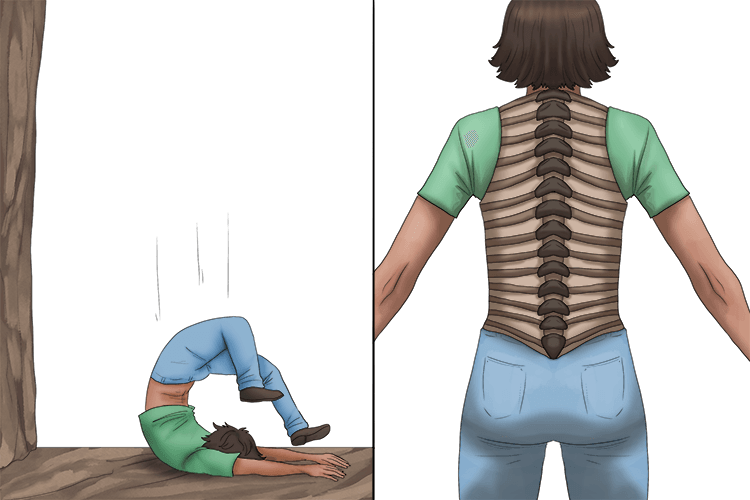
To remember the meaning of vertebrae, use the following mnemonic:
I fell off the vertical cliff and needed a brace (vertebrae) for each of the small bones forming my backbone.
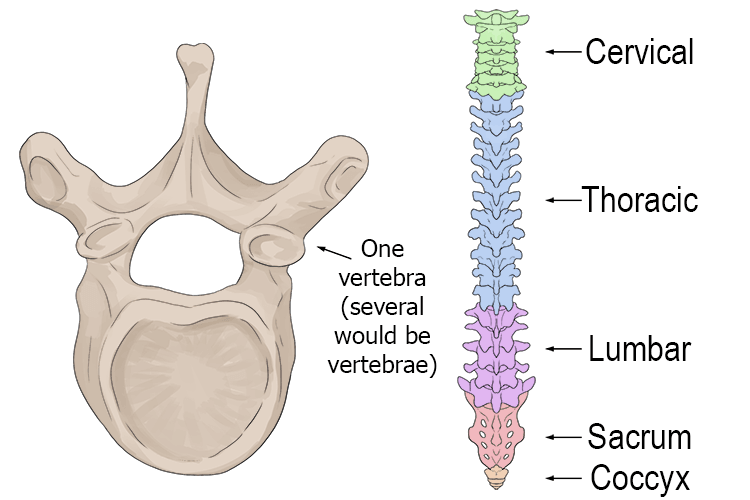
Vertebrae are the individual bones that make up the spinal column, with 33 total vertebrae in humans that are divided into distinct regions: 7 cervical (neck), 12 thoracic (chest), 5 lumbar (lower back) and fused regions: sacral (5 vertebrae fused to form the sacrum) and coccygeal (4 vertebrae fused to form the coccyx). Each vertebra has a similar basic structure consisting of a thick, cylindrical body at the front that bears most of the weight, an arch at the back that forms an opening, and various bony projections that serve as attachment points for muscles and ligaments.
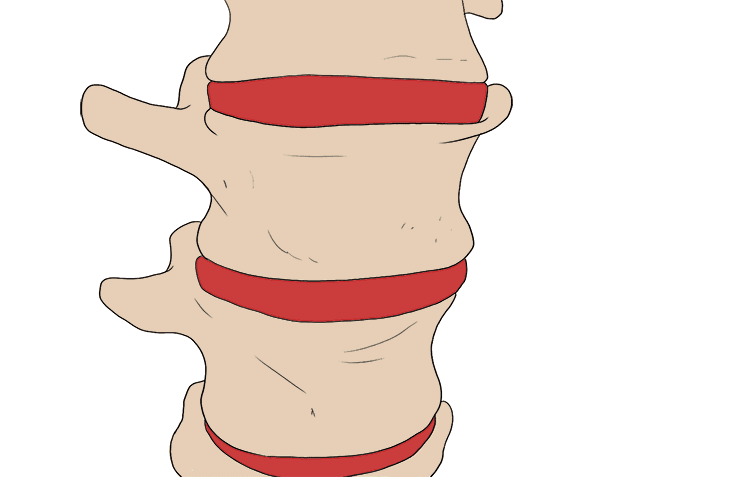
Between each pair of vertebrae are disks made of cartilage that act as shock absorbers, which allow slight movement between vertebrae.
The vertebrae work together to provide structural support for the entire body, protect the delicate spinal cord, which flows through the middle of the vertebrae, and serve as an attachment site for the many muscles that control posture and movement.