as sparrows, eagles or the hare the lion
To remember this quote use the following mnemonic.
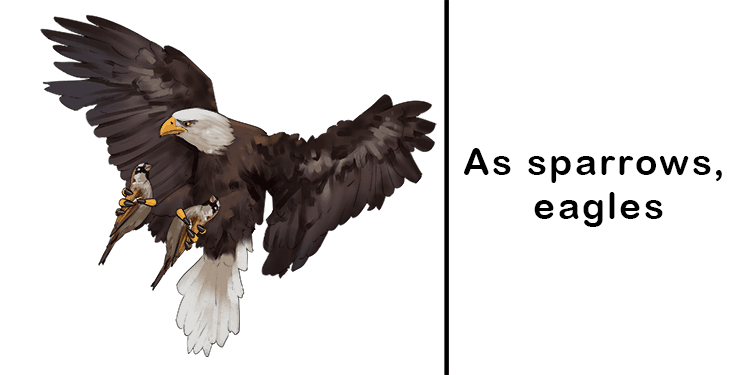
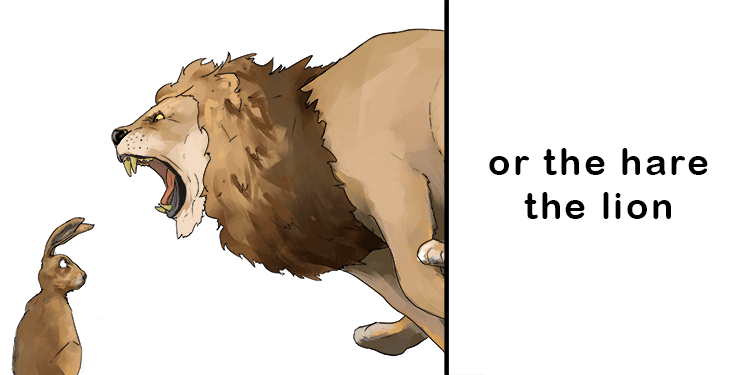
Note: If you want even more detailed mnemonics to remember the quote starts with "As," you could think of the sparrows being asleep (as) before the eagle swooped down. To remember it is "or," you could think of the hare using an oar (or) before the lion roared. You can always add to the mnemonics we have given.
"As sparrows, eagles or the hare the lion," (act 1 scene 2 line 39), reports the captain to King Duncan about how great was Macbeth in the battle against Thane of Cawdor.
Macbeth vee Thane of Cawdor:
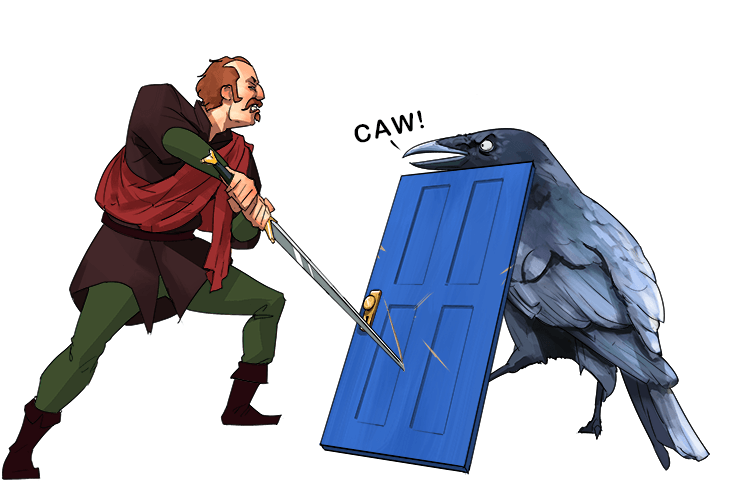
Macbeth fighting a cawing crow with a door (Cawdor).
Meaning
- "As sparrow, eagles or the hare the lion." - This is a simile used to show how fearless Macbeth was in battle. The captain sarcastically compares Macbeth's reaction to being attacked by rebel forces to how a sparrow might scare an eagle or a hare might frighten a lion - in other words, not at all. The implication is that Macbeth is as powerful and dominant as the eagle and lion and not intimidated by weaker enemies.
Exam advice
- Interpretation - The line emphasises Macbeth's heroism and courage. The comparison shows that Macbeth is seen as a fearless warrior - so strong that the idea of him being afraid is laughable.
- Language of animal imagery - Using eagles and lions suggest nobility, strength and dominance - qualities associated with Macbeth early in the play.
- Language of contrast - The sparrow and the hare represent weakness and fear, while the eagle and lion represent power and bravery. This sharp contrast builds up Macbeth's heroic image.
- Themes: bravery and honour - This quote helps establish Macbeth as a valiant and noble figure in the eyes of others.
- Themes: reputation vs reality - Macbeth begins as a national hero but this outward strength masks the ambition and vulnerability that soon lead to his moral collapse.
- Themes: Masculinity and Violence - The line ties masculinity to fearlessness and physical power. This is important when exploring how Macbeth and Lady Macbeth struggle with traditional gender roles.
- Character development - This quote is part of the initial heroic image of Macbeth. The audience is meant to admire him here, making his transformation into a tyrant more tragic. It contrasts sharply with Macbeth's later paranoia and fear, especially after Banquo's ghost appears or when facing Macduff.