armature – a coil of wire (usually copper) wound around an iron core used to create a magnetic field
(pronounced ar-muh-cher)
To remember the meaning of armature, use the following mnemonic:
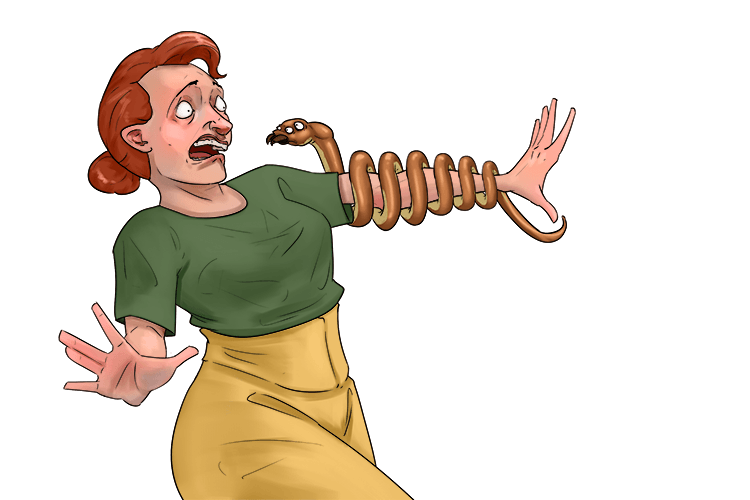
Around my arm a creature (armature) wrapped itself around like a coil of wire.
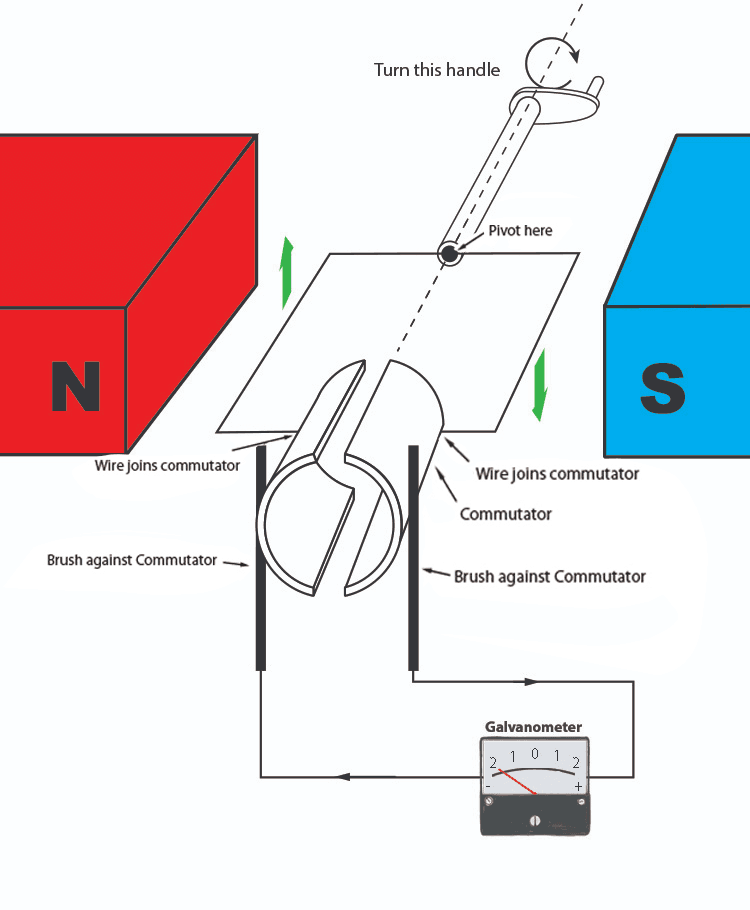
If you mechanically turn (by wind, water wheel, or by hand) an armature (a rotating copper coil) between magnets you will create electricity - either:
D.C Generator (dynamo)
If you use a commutor you will create Direct Current (D.C).
Or
A.C Generator (alternator)
If you use slip rings you will create Alternating Current (A.C)
/remember-creating-direct-current-in-physics-a.5acf273.png)
D.C supply
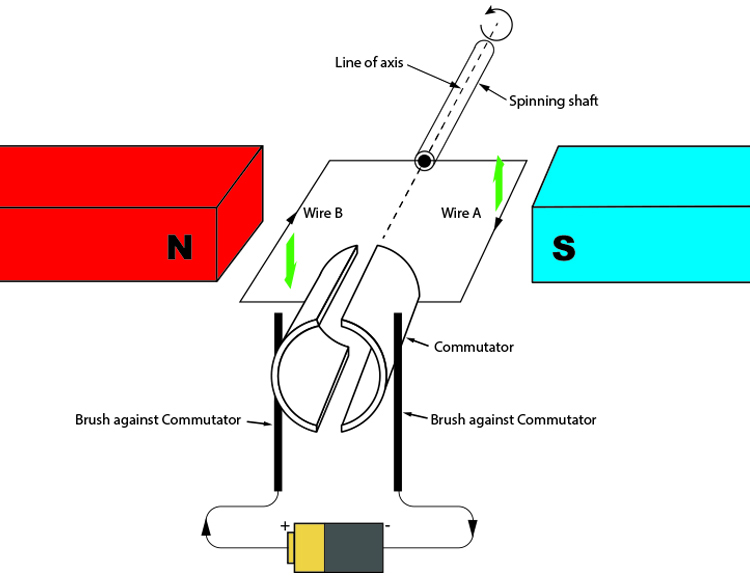
If you pass a Direct Current through an armature (a coil of wire wrapped around an iron core) between two magnets and use a commutor you can create a motor (motors produce movement and can spin a shaft) to rotate a device.
A.C supply
If you use an Alternating Current supply and transiters (a switch), diodes (allowing one way supply), capacitors (temporary storage devices) and modern day computers then you can design motors to turn a shaft. Armatures can produce a magnetic field of the correct pole to either:
Spin a magnet.
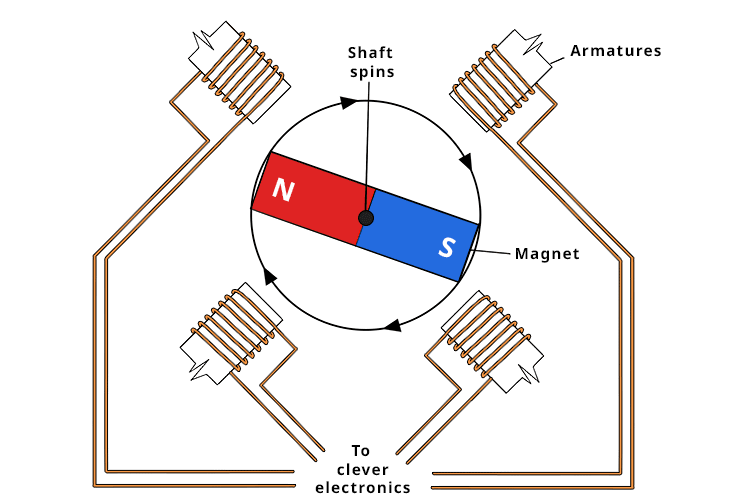
Or the armature can spin itself.
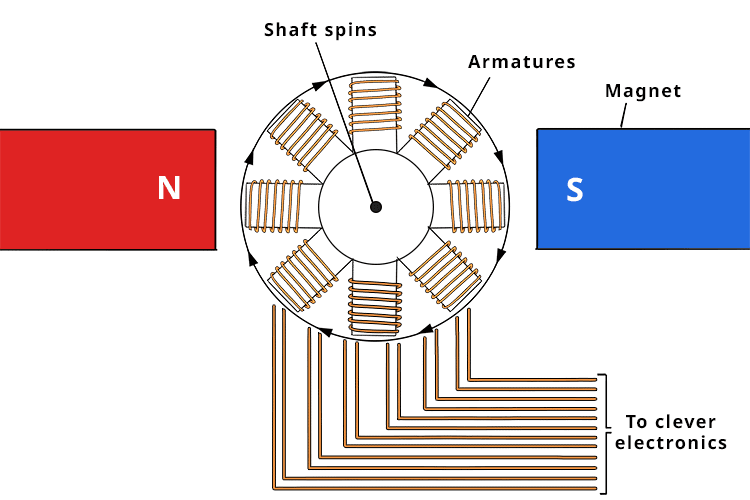
Both these systems spin a shaft which drives a device.
The armature is the key component that converts electrical energy into mechanical energy in motors, or mechanical energy into electrical energy in generators, making them essential for the operation of countless electrical devices from household appliances and power tools to industrial machinery and power generation systems.