P-wave – longitude seismic waves produced by earthquakes; Primary wave.
Note: P waves are twice as fast as S waves and so therefore are the 'primary' wave.
Think P for primary and P for pulse like a heart beat back and forwards.
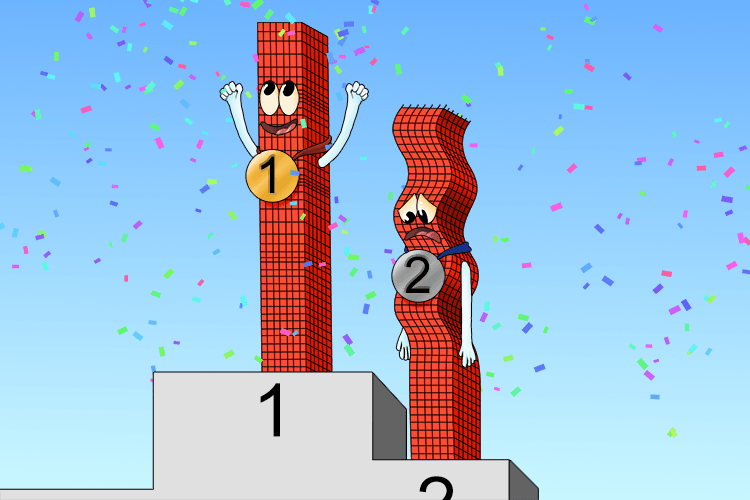
To remember the meaning of P-wave, associate it with being first, or primary:
P waves, or primary waves, are a type of seismic wave (actually a pulse not a wave) produced by earthquakes that travel through the earth as longitudinal waves, meaning they cause particles in the ground to vibrate back and forth in the same direction as the wave is travelling. They are called primary waves because they are the fastest type of seismic wave and therefore are the first to be detected.
P waves can travel through all states of matter including solids, liquids and gases. As they pass through the Earth, they compress in a push-pull motion similar to sound waves, typical of longitudinal waves.
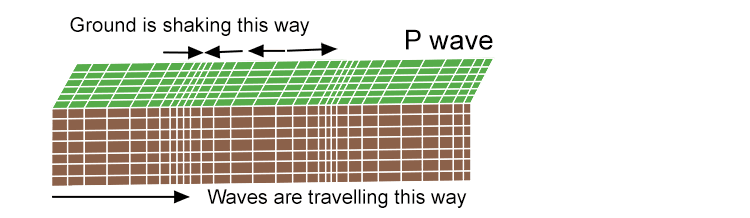
As can be seen in this image, there are points at which the ground compresses followed by expansion as the P wave travels through.
P waves generally cause less damage than the slower S waves that follow them during an earthquake.